
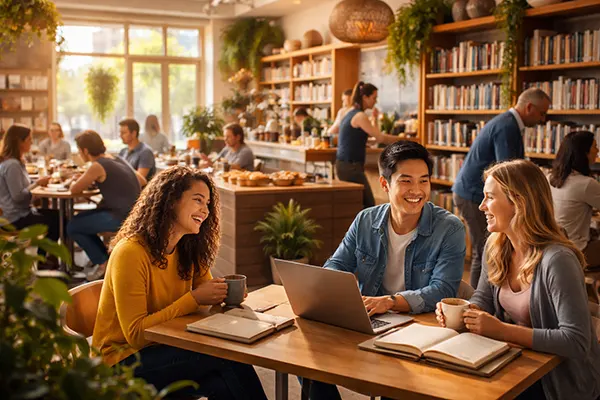
Third Places in Modern Life: Why Cafés, Libraries and Local Spaces Matter
In a world shaped by remote work, constant connectivity and growing urban density, everyday environments beyond home and office have taken on a renewed role. These informal settings—often referred to as “third places”—offer more than convenience. They create space for social interaction, mental recovery and a sense of belonging that structured environments rarely provide. As lifestyles shift in 2026, their importance is no longer cultural curiosity but a practical necessity for balance and wellbeing.
What Defines a Third Place in Today’s Context
The concept of a third place originates from sociological research and describes environments where people gather outside their home (first place) and workplace (second place). Traditionally, these included cafés, parks, libraries and community centres. In 2026, the definition has expanded to include co-working hubs, hybrid cafés and even bookshops with social seating areas.
What distinguishes these places is not their function but their atmosphere. They are accessible, neutral and encourage informal interaction. Unlike offices, there is no expectation of productivity. Unlike homes, there is no isolation. This balance creates a setting where individuals can feel present without pressure.
Another defining feature is regularity. People return to these spaces not just for services, but for familiarity. Staff recognise faces, routines develop, and over time, these environments foster micro-communities that contribute to social stability, particularly in large cities.
How Modern Lifestyles Are Reshaping These Spaces
Hybrid work has significantly increased demand for flexible environments. Many professionals now alternate between home and public spaces, using cafés or libraries as temporary workstations. As a result, venues have adapted by offering reliable Wi-Fi, charging points and quieter zones.
Urban planning trends also reflect this shift. In European cities, including France and the UK, local authorities increasingly invest in multifunctional public spaces designed for both leisure and informal work. Libraries, for example, now include collaborative areas, digital resources and extended opening hours.
At the same time, there is a growing focus on inclusivity. Third places are becoming more accessible to different age groups, income levels and cultural backgrounds. This evolution reinforces their role as shared environments rather than niche destinations.
The Psychological Value of Informal Social Spaces
Regular exposure to third places supports mental health in subtle but measurable ways. Even brief interactions—such as greeting a barista or sharing a table—help reduce feelings of isolation. These low-pressure encounters are particularly valuable in urban environments where social connections can otherwise feel fragmented.
Research in recent years has highlighted the importance of “weak ties”—casual social connections that do not require emotional investment but still contribute to a sense of belonging. Third places naturally facilitate these interactions, making them essential for emotional balance.
They also provide a change of environment, which is critical for cognitive recovery. Moving from a private or work-focused setting into a neutral space allows the brain to reset, improving concentration, creativity and overall wellbeing.
Why They Matter More in a Digitally Driven World
As communication increasingly moves online, physical interaction becomes more intentional. Third places offer an alternative to screen-based socialising, encouraging presence and attention. This is particularly relevant for younger generations, who balance digital and physical identities.
There is also a growing awareness of digital fatigue. Spending extended hours in front of devices leads many people to seek environments where interaction feels more natural. Libraries and cafés provide this contrast without requiring structured social commitments.
In addition, these spaces help maintain boundaries. When work and home merge, especially in remote setups, third places act as a buffer zone. They create a clear transition between roles, which is essential for maintaining a healthy routine.
Community, Local Identity and Economic Impact
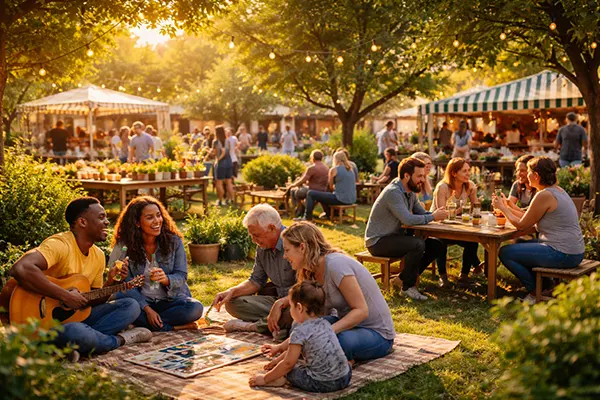
Beyond individual benefits, third places contribute to the identity of neighbourhoods. Independent cafés, small libraries and local venues often reflect the character of an area, making them important for cultural continuity. They become reference points for residents and visitors alike.
Economically, these spaces support local ecosystems. Small businesses, in particular, rely on regular foot traffic generated by community engagement. In turn, they provide accessible environments that do not require significant spending to participate in.
In 2026, there is also a noticeable shift towards supporting local initiatives. Consumers increasingly value authenticity and proximity, choosing neighbourhood spaces over larger chains when possible. This trend reinforces the sustainability of third places within urban economies.
The Role of Third Places in Building Resilient Communities
During periods of social or economic uncertainty, accessible gathering spaces become even more important. They provide informal support networks where people exchange information, share experiences and maintain social cohesion.
Community-led initiatives often emerge from these environments. Book clubs, local workshops and informal meetings frequently begin in cafés or libraries, demonstrating how these spaces act as catalysts for collective activity.
Ultimately, third places help create a sense of continuity. In rapidly changing urban landscapes, they offer stability through routine, familiarity and shared presence. This makes them not just convenient locations, but essential elements of modern living.