

Why People Increasingly Plan Holidays Around Rest Rather Than Sightseeing
A holiday used to be measured by how much a traveller managed to fit into a few days: famous landmarks, museums, guided tours, restaurants, day trips and photographs from every major stop. By 2026, that idea has not disappeared, but it is no longer the default for many people. A growing share of travellers begin with a different question: how do I want to feel during the trip? Rest, sleep, quiet, time outdoors, slow meals and an unhurried daily rhythm are increasingly treated as the main purpose of a break rather than the empty space between attractions. This change does not mean that people have lost interest in culture or local experiences. It means that sightseeing is more often being fitted around energy levels, comfort and personal priorities instead of controlling the entire schedule. Current research from Hilton, Expedia Group, Skyscanner and the Global Wellness Institute points in the same direction: travellers still want meaningful experiences, but many also want more control over pace, fewer obligations and enough free time to return home feeling restored rather than exhausted.
Why Rest Has Become a Primary Reason to Travel
The clearest reason for the shift is simple: many people no longer want a holiday to feel like another form of work. A tightly planned city break can involve early alarms, timed tickets, airport transfers, public transport changes, queues, restaurant reservations and constant decisions about what comes next. None of those things are necessarily negative, yet their combined effect can make a short trip surprisingly demanding. When annual leave is limited, travellers may be less willing to spend several valuable days rushing from one obligation to another. Rest-first planning reverses the order. Instead of selecting ten attractions and then squeezing meals and sleep around them, the traveller first protects the parts of the day that make the break feel comfortable. That may mean a late breakfast, a quiet afternoon, a swim before dinner or simply an evening with no booking at all. The result is a schedule that has space rather than a schedule that must be completed.
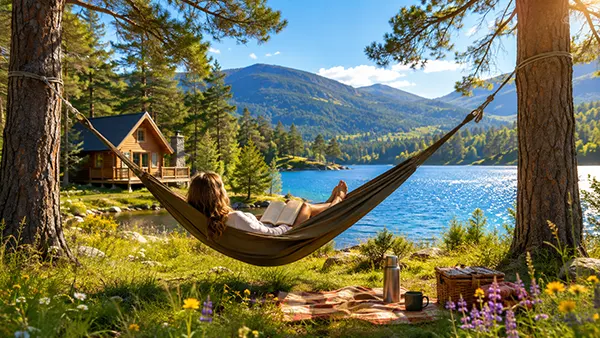
Travel research for 2026 reflects this change in motivation. Hilton’s 2026 Trends Report identifies rest and recharge as the leading global motivation for leisure travel, while its wider findings also describe a stronger desire for silence, personal space, familiar routines and time devoted to individual interests. Expedia Group’s Unpack ’26 research highlights “Readaways”, trips centred on reading, relaxation and time with family or friends, while Skyscanner’s 2026 material points to slow holidays and travel choices shaped by personal interests rather than by a fixed list of famous places. These trends matter because they show that rest is not being treated merely as a spa add-on or a luxury extra. For many travellers it is becoming part of the basic definition of a successful holiday. A quiet rental with a terrace, a coastal stay with no fixed programme or a week in a small town can therefore feel more valuable than a more famous destination with a demanding itinerary.
There is also a change in how people judge value. A busy itinerary can look impressive on paper because it contains more tickets, more locations and more photographs. Yet value during a holiday is not always proportional to the number of things completed. A traveller who spends an afternoon reading beside the sea, takes a long lunch and walks through a neighbourhood without a route may remember the day more positively than one spent moving quickly between six scheduled stops. This is particularly relevant when travel itself already consumes time and energy. Early flights, long transfers and frequent hotel changes can reduce the amount of genuine leisure inside a trip. Rest-first travellers increasingly respond by reducing movement: they stay longer in one place, choose accommodation that is pleasant enough to spend time in and leave room for weather, mood and spontaneous decisions. The holiday becomes less about proving that the destination was fully covered and more about using time in a way that feels worthwhile.
The Limits of the Packed Itinerary
The packed itinerary became popular for understandable reasons. Flights can be expensive, annual leave can be scarce and many travellers feel that visiting a new city creates a responsibility to see its best-known sights. Social media can intensify that feeling by presenting a destination as a sequence of essential stops. The problem appears when every recommendation becomes a requirement. A museum at 10:00, lunch at 12:30, a tour at 14:00 and a viewpoint before sunset may be manageable for one day, but repeating that rhythm across an entire week leaves little room for rest or unexpected changes. It can also turn small disruptions into major frustrations. A delayed train, heavy rain or a longer-than-expected meal is no longer a minor inconvenience; it threatens the rest of the schedule. Rest-focused planning accepts from the beginning that not every hour needs a purpose and that unused time is not wasted time.
Another weakness of a dense schedule is decision fatigue. Even well-organised travellers make dozens of small choices each day: which route to take, where to eat, how long to stay, what to skip and when to return to the hotel. The more locations a person adds, the more decisions follow. This is one reason simple holidays can feel surprisingly satisfying. A traveller who chooses one neighbourhood, one beach or one rural base reduces the need to keep solving logistical problems. Familiarity also builds quickly. By the second or third day, the nearest café, supermarket, walking route and transport stop are already known, so the trip requires less mental effort. That does not make the holiday dull. It creates enough stability for local details to become more noticeable: the morning rhythm of a town, the best time to swim, the quietest path or the café that becomes a regular stop.
Rest-first travel also challenges the idea that every important experience must be pre-booked. American Express travel research for 2026 shows strong interest in leaving room for unexpected local experiences, while also showing that travellers, particularly younger adults, still value hands-on activities and local culture. These two preferences are not contradictory. A person can spend most of a day slowly and still join a cooking class, visit a gallery or take a guided walk. The difference is scale. Instead of stacking several activities together, the traveller chooses one that is genuinely interesting and allows it to become the focus of the day. This approach often improves flexibility as well. If energy is low, plans can be moved. If a local market, conversation or scenic walk turns out to be more enjoyable than expected, there is no urgent need to leave simply because the next booking is waiting.
How Rest-First Holidays Are Changing Travel Choices
Once rest becomes the main goal, the destination itself is judged differently. Famous monuments and a long list of attractions become less important than practical questions about noise, climate, space, walkability and daily convenience. A traveller planning a restful break may prefer a smaller coastal town to a major capital, a lakeside village to a multi-city route or a residential district to the busiest historic centre. The destination does not have to be remote. Even a large city can work well when the accommodation is in a quieter area, public transport is straightforward and the traveller is comfortable limiting sightseeing to a small number of places. What changes is the selection criteria. The question is no longer only “What can I see there?” It is also “Can I sleep well, move around easily, eat without planning every meal and spend part of the day doing very little?” Those practical qualities increasingly influence where people choose to stay.
Accommodation therefore carries more weight in a rest-focused holiday. On a traditional sightseeing trip, a room may function mainly as a place to sleep before the next day begins. On a slower break, the property is part of the holiday itself. A balcony, comfortable chair, shaded garden, pool, kitchen, good soundproofing or direct access to a beach or walking route may matter more than being two minutes from the busiest square. This does not automatically mean choosing expensive hotels. A modest apartment can support rest better than a luxury room if it provides privacy, space, a useful kitchen and a location that removes unnecessary travel. The same logic applies to rural cottages, small guesthouses and self-catering stays. Travellers are often paying not only for a bed but for the ability to spend several pleasant hours without needing to go anywhere else.
Length of stay is changing for similar reasons. Moving between several destinations can make a trip feel varied, yet each move introduces packing, check-out times, transport, new directions and another period of adjustment. A rest-first traveller may choose one base for seven nights instead of three locations across the same week. That choice can reduce the number of headline attractions visited, but it creates more usable leisure time. Longer stays also make slower routines possible. There is time for a second visit to the same beach, a morning with no plan, a meal repeated because it was good, or a day spent indoors when the weather changes. This style of travel is especially suited to people who do not want every day to feel exceptional. The appeal comes from having a temporary routine that is easier and calmer than the one left at home.
What Travellers Now Look for in a Destination
Quiet has become a practical travel feature rather than an abstract idea. A destination may look peaceful in photographs while still being noisy at night, crowded during the day or difficult to navigate without a car. Rest-focused travellers therefore benefit from checking the details that shape ordinary hours. The location of accommodation within a resort or city matters. So do nearby construction, nightlife streets, airport flight paths, steep walking routes and the time needed to reach food shops or restaurants. A room facing an internal courtyard may be a better choice than one with a dramatic view over a busy square. A smaller town with a direct rail connection can be easier than a remote village that requires several transfers. Rest is often protected by ordinary conveniences rather than by dramatic scenery.
Season also matters. Travelling outside the busiest weeks can reduce crowds and sometimes moderate heat, while making public spaces feel less pressured. Skyscanner’s 2026 research reports continued interest in shoulder-season travel, and the Global Wellness Institute has highlighted cooler-climate travel and off-peak periods as part of current wellbeing-led travel behaviour. For a traveller whose priority is rest, these choices can be more important than visiting at the most famous time of year. A Mediterranean town in late spring may offer easier walking and quieter restaurants than the same place at the height of summer. A mountain area in early autumn may provide pleasant daytime activity without the intensity of peak season. The best timing depends on local weather and services, but the principle is consistent: comfort should be considered alongside price and sightseeing potential.
Simplicity is another important quality. A restful destination does not need a large wellness programme, complicated treatments or a strict retreat timetable. For many travellers, the useful ingredients are much more ordinary: a comfortable bed, enough darkness at night, fresh air, easy access to food, a pleasant place to sit, a safe walking route and enough privacy to control the day. The Global Wellness Institute’s 2026 trend work describes growing interest in deep rest, quiet, privacy and slower daily rhythms. Those ideas can be applied without turning the holiday into a formal wellbeing project. A traveller can gain much of the same practical benefit by avoiding red-eye flights, choosing one base, limiting early starts and selecting accommodation where staying in for part of the day feels pleasant rather than disappointing.
How to Plan a Holiday That Actually Feels Restful
The first step is to define the purpose before choosing the destination. “I want a beach holiday” is useful, but “I want seven days with good sleep, swimming, easy meals and no more than one fixed activity a day” is far more specific. The second statement immediately changes the search. It makes a long transfer less attractive, gives more importance to accommodation quality and removes destinations that require constant transport. Different travellers will define rest differently. One person may want complete quiet, another may prefer cafés and evening walks, while a family may consider rest to mean a safe resort where children can play without elaborate daily planning. The important point is that the desired rhythm is decided first. Once that rhythm is clear, attractions can be added selectively rather than allowed to dictate the whole holiday.
A practical rest-first itinerary needs protected empty time. This can be created by placing only one major commitment on a day, keeping the first or final day light and avoiding consecutive early starts. A week-long trip might include two or three planned experiences rather than a full programme: perhaps a museum on Tuesday, a boat trip on Thursday and a special dinner on Saturday. The remaining time is not unfinished planning. It is the part of the holiday that absorbs delays, weather changes and changing energy levels. It also allows simple activities to happen naturally. A long breakfast can continue without checking the clock. A swim can turn into an afternoon by the water. A local recommendation can be followed on the same day rather than added to an already crowded list. Flexibility becomes an active feature of the itinerary.
Travel days deserve the same attention. A cheap flight at 05:45 may save money but can also remove sleep from the first night and make the arrival day almost unusable. A hotel change that looks easy on a map may take half a day once packing, check-out, transport and check-in are included. Rest-focused travellers benefit from comparing the full cost of movement, not only the ticket price. A later direct flight, airport hotel, private transfer or train can sometimes protect more holiday time even when the fare is higher. The same applies to departure. Keeping the final evening free and avoiding a difficult transfer before an early flight can prevent the holiday from ending in a rush. The aim is not perfect comfort at every stage; it is to identify which sources of friction are worth paying to remove.
Finding the Right Balance Between Rest and Local Experiences
Planning around rest does not require ignoring the place being visited. In fact, a slower schedule can make local experiences feel more distinct because they are not competing with several others on the same day. A useful method is to choose a small number of “anchor experiences” before departure. These are the things that would genuinely be missed if the trip ended without them: a particular museum, a coastal walk, a historic site, a meal at a local restaurant or a day trip to a nearby town. Everything else remains optional. This approach prevents the common problem of turning recommendations into obligations. It also makes it easier to judge new suggestions during the trip. If an activity sounds better than the original plan, there is room to change. If nothing sounds appealing, resting is still a valid use of the day.
Local life can also be enjoyed through routines that require little effort. Buying breakfast from the same bakery, walking through a neighbourhood market, sitting in a public garden, taking an evening promenade or eating at a family-run restaurant can provide a strong sense of place without a formal tour. Hilton’s 2026 research notes interest in familiar routines and ordinary local activities, while Expedia’s “Readaways” trend reflects the appeal of screen-light, low-pressure time with books, family and friends. These patterns suggest that travellers are not necessarily asking for less meaning from holidays. They are changing where that meaning comes from. Instead of collecting as many recognised sights as possible, they may value the repeated café, the quiet beach at 08:00 or the simple pleasure of having nowhere else to be.
The most useful test is how the traveller expects to feel on the final day. If the plan already looks tiring before departure, adding more activities is unlikely to improve it. A rest-centred holiday should contain enough interest to feel like travel, but enough unclaimed time to feel different from an ordinary working week. For some people that balance may still include busy sightseeing days followed by slower ones. For others it may mean choosing one location and barely leaving the surrounding area. There is no universal ratio. The change visible in 2026 is not the disappearance of landmarks, museums or cultural trips. It is the decline of the assumption that a good holiday must maximise them. More travellers are giving rest equal or greater status, then selecting experiences that fit around the pace they actually want to keep.