

Rest Without Traps: How to Stay in Control When Online Gambling Is Your “After-Work Switch-Off”
For a lot of people, a quick session on an online casino site or a few online games feels like the mental equivalent of putting your feet up: predictable, private, and easy to start. The problem is that the same things that make it convenient can also make it slippery—time disappears, spending feels abstract, and a stressful day can quietly set the tone for riskier choices. This article is about staying in charge of your evenings in 2026: keeping play genuinely “small and relaxing”, and knowing what to do the moment it stops feeling that way.
Start With Guardrails: Make “Relaxing” Measurable
The simplest way to keep control is to stop relying on mood alone. Decide in advance what “a relaxing session” actually means in numbers: a set amount of money you can afford to lose, and a fixed amount of time you’re willing to spend. If you can’t write those two numbers down in a sentence, you’re not setting a limit—you’re gambling on self-control.
In 2026, most regulated operators offer limit-setting options (deposit limits, loss limits, reality checks, and time-outs). Use them, but don’t treat them as your only safety net. Set the limit on the operator side and also on your side: a phone timer, a calendar reminder, or a hard stop before a specific evening routine (for example, “I stop before I start cooking” or “I stop before I shower”). The goal is to create a friction point that interrupts autopilot.
Make your spending rule realistic. A “£10 cap” that you regularly break is worse than a “£30 cap” you genuinely stick to, because broken rules teach your brain that limits are optional. If you share finances, the most honest test is this: would you be comfortable explaining last month’s gambling spend to someone you trust, without minimising it?
Reduce the ‘Frictionless’ Factors That Create Overspend
Overspending often isn’t about greed—it’s about ease. Saved cards, one-click deposits, and quick top-ups make money feel like points rather than cash. One practical fix is to remove saved payment details and force yourself to re-enter them each time. That small hassle is not a bug; it’s a boundary.
Another strong lever is your bank. Many UK banks provide gambling blocks or merchant controls that can stop gambling transactions. If you notice repeated overspend, asking your bank about transaction blocking is a concrete step that reduces the chance of a late-night “just one more deposit” spiral.
If you want a device-level “seatbelt”, blocking tools can help—especially if late-night play is your weak spot. In the UK, widely used options include GAMSTOP (online self-exclusion for Great Britain-licensed operators) and Gamban (blocking software for devices). If you use these tools, treat them as a planned boundary rather than a punishment.
Know the Early Warning Signs: When ‘Unwinding’ Turns Into Chasing
Most people don’t wake up one day with a serious problem; it’s usually a slow shift in patterns. Pay attention to “micro-signs”: you play longer than planned, you think about playing during work, you feel irritated when interrupted, or you become secretive about time or spend. Those are not moral failings—they are signals that your brain is learning a habit loop.
Chasing is the big red flag. Chasing doesn’t only mean trying to win back money; it also shows up as trying to “fix” the mood of a bad day with one more round. The moment you notice that your goal has changed from relaxing to “getting back to even”, you’re no longer taking a break—you’re negotiating with loss.
A useful self-check is the “three-question pause” before you log in: (1) Am I tired, angry, lonely, or stressed? (2) What’s my limit for money and time tonight? (3) What will I do immediately after I stop? If you can’t answer all three, that’s a sign you’re about to play on impulse.
Have a Script for the Moment Control Slips
When you’ve gone past your limit, don’t try to salvage the night by playing “smarter”. Have a pre-written exit plan that you follow automatically: log out, uninstall the app shortcut, put your phone on charge in another room, and do a five-minute reset (tea, shower, short walk, or a simple stretch). The point is to change the physical context, not to debate with yourself.
If you keep breaking limits, escalate the tools rather than blaming willpower. A time-out is a short planned break; self-exclusion is a stronger step for people who recognise gambling is harming them and want to stop access. In Great Britain, you can use GAMSTOP to exclude yourself from online gambling companies licensed there.
If you need to speak to someone urgently in the UK, the National Gambling Helpline (GamCare) is available 24/7, and it’s designed for exactly these moments—when you want to stop the situation getting worse, not when you’ve already hit a crisis.
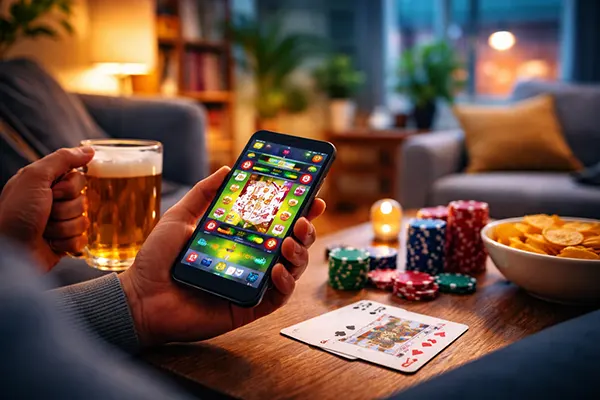
Build a Better “After-Work Switch-Off” That Doesn’t Depend on Risk
Many people use gambling to regulate stress: it distracts, it creates a sense of control, and it delivers quick stimulation. So if you only remove gambling without replacing what it was doing for you, the habit tends to creep back. The practical approach is to build a short decompression routine that you can do first—then decide whether you still want to play.
Try a “two-stage evening”: stage one is a 10–20 minute low-effort reset (food, shower, tidy one small area, or a short walk). Stage two is your chosen leisure. This works because it reduces the odds you’ll start gambling while hungry, exhausted, or wired from work—states where impulse control is reliably worse.
Also, keep your “relaxation menu” varied. If gambling is your only quick reward, your brain will default to it. Have at least three alternatives that are genuinely easy: a comfort show episode, a quick game that doesn’t involve money, a call to a friend, a simple workout, or reading something light. The goal is not perfect self-improvement; it’s options.
Use Support Early, Not Only in Crisis
Support isn’t only for extreme situations. Early steps that help include paying important bills before discretionary spending, keeping gambling money separate from essentials, and being honest with one trusted person about what’s happening. These choices work best when the problem is still “starting to grow”, not when it’s already unmanageable.
If you want structured tools, self-exclusion routes and blocking methods are worth setting up before you “need” them. In Great Britain, GAMSTOP can block access to participating online operators for a chosen period, and software blockers such as Gamban can add device-level restrictions.
Finally, keep an eye on offers and marketing pressure. Promotions are designed to increase activity, so treat them as a nudge to spend more, not as a reason to stretch your limits. If a promotion makes you feel rushed, annoyed, or “obliged to play”, it’s a sign it’s working on your emotions rather than your choices.