
Shinrin-Yoku: How Japanese Forest Bathing Reduces Stress and Supports Wellbeing
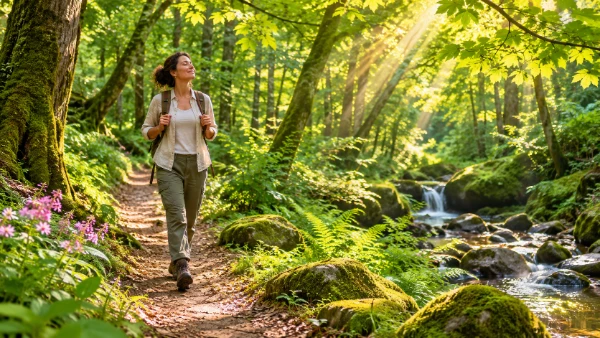
A quiet walk among trees can feel surprisingly different from an ordinary stroll through town. The air smells of leaves and damp earth, birdsong replaces traffic noise, and the constant pressure to hurry begins to fade. In Japan, this deliberate connection with woodland is known as Shinrin-yoku, or forest bathing. Despite its name, it involves no swimming or water. Instead, the practice encourages people to slow down and experience their natural surroundings through sight, sound, smell and touch. Research suggests that spending time in forests may ease psychological stress, improve mood and support relaxation, although the strength of the evidence varies between health outcomes. Understanding how Shinrin-yoku works can help anyone incorporate its principles into everyday life, even without access to a remote forest.
What Is Shinrin-Yoku and Why Did It Originate in Japan?
Shinrin-yoku translates literally as “forest bathing”, describing the experience of being immersed in the atmosphere of a forest. Japan’s Forestry Agency introduced the concept in 1982 to encourage people to visit woodlands for relaxation and recreation. The initiative emerged at a time when urbanisation, demanding working schedules and growing concern about stress were influencing public discussions about health. Rather than treating forests simply as places for timber production or outdoor exercise, the idea encouraged people to appreciate their restorative qualities. The Akasawa Natural Recreational Forest in Nagano Prefecture became an important early location for organised forest bathing activities, helping establish the practice in modern Japanese culture.
Although the modern name appeared in the twentieth century, Japanese relationships with forests have much older cultural roots. Woodlands feature prominently in Shinto traditions, where certain trees and natural places are regarded as sacred, while Buddhist traditions have long encouraged contemplation and attentive observation. Shinrin-yoku is not itself a religious ceremony, however, and participation requires no particular beliefs. Its central principle is simply to spend unhurried time among trees while paying attention to the surrounding environment. This distinguishes it from hiking, where reaching a destination or covering a particular distance may be the main objective. A forest bathing session can involve walking only a short distance, sitting quietly or observing the changing light beneath the canopy.
Interest in forest bathing gradually extended beyond Japan as researchers investigated the relationships between natural environments, stress and human wellbeing. Japanese scientists, including Professor Yoshifumi Miyazaki, helped develop the scientific study of forest environments and physiological relaxation. Today, guided forest bathing sessions are available in various countries, although the practice does not require professional instruction or specialist equipment. The Swedish University of Agricultural Sciences, for example, describes forest bathing as an activity involving slow movement, sensory awareness and periods of rest. Importantly, the benefits are not necessarily restricted to famous Japanese forests. An accessible woodland with comfortable paths, manageable noise and opportunities to pause can provide a suitable setting for a similar experience.
How Forest Bathing Differs from Ordinary Walking and Meditation
The most noticeable difference between forest bathing and conventional walking is the intention behind the activity. During a fitness walk, people often concentrate on speed, distance, step counts or cardiovascular effort. Shinrin-yoku removes these targets and makes the surroundings the focus instead. Someone might stop to observe the movement of branches, listen to different bird calls or examine the texture of moss growing on a fallen log. There is no need to maintain a particular pace, and stopping frequently is part of the experience rather than an interruption. This slower approach may be especially appealing to people whose working days involve constant deadlines, notifications and competing demands on their attention.
Forest bathing also shares certain features with mindfulness, particularly the practice of paying attention to present experiences without immediately judging them. However, it does not require formal meditation, specific breathing patterns or an attempt to empty the mind. A person can remain aware of ordinary thoughts while gradually returning attention to the forest. For example, noticing the temperature of the air, the smell of pine needles or the sensation of walking over soft ground provides simple points of focus. Natural sounds can also help redirect attention away from persistent worries. These sensory experiences make the activity approachable for people who struggle with seated meditation or find conventional relaxation exercises uncomfortable.
Another distinction concerns the environment itself. Walking beside heavy traffic may provide valuable physical exercise, but it also exposes people to noise, congestion and frequent demands for attention. A quiet woodland offers a different combination of sounds, views and physical sensations. Nevertheless, forest bathing should not be treated as a competition to find the most remote or picturesque location. A small wooded park may be more useful than a distant forest that requires a stressful journey to reach. The most appropriate setting is one where a person feels reasonably safe, comfortable and able to slow down. Accessibility, familiarity and personal preference matter more than the size or reputation of the woodland.
How Does Forest Bathing Affect Stress, Mood and Physical Health?
Stress involves both psychological experiences and physical responses. When a person encounters a demanding situation, the nervous system can increase alertness, heart rate and muscle tension, while hormones such as cortisol help the body respond to perceived challenges. These reactions are normal, but persistent stress can interfere with sleep, concentration and everyday wellbeing. Forest bathing may create conditions that encourage the body to move towards a more relaxed state. Reduced noise, pleasant surroundings and a temporary break from demanding activities can all contribute. Research has examined changes in heart rate, blood pressure, stress hormones and emotional wellbeing after forest exposure, although findings differ according to participants, environments and study methods.
A systematic review and meta-analysis published in Frontiers in Psychology in February 2026 examined 11 studies of Shinrin-yoku and reported an average reduction in heart rate of approximately four beats per minute following forest bathing. The researchers also identified improvements in several measures of negative mood, including tension, fatigue and feelings of discouragement. However, they rated the overall certainty of evidence as very low because studies differed considerably and had methodological limitations. The analysis did not establish a clinically meaningful reduction in salivary cortisol. These findings suggest that forest bathing can encourage short-term relaxation, but they do not demonstrate that spending time among trees reliably treats cardiovascular disease or corrects hormonal imbalances.
Research into psychological wellbeing offers further evidence of potential benefits. A 2026 systematic review published in BMC Public Health combined findings from 25 studies involving 1,876 participants. Forest-based interventions were associated with reductions in perceived stress, anxiety symptoms and depressive symptoms, although results varied substantially between studies. The authors noted that differences in programme length, research methods and participant characteristics complicated interpretation. Many studies also relied on questionnaires completed by participants, making expectations and other influences difficult to exclude. Consequently, forest bathing is best understood as a potentially helpful addition to ordinary stress management rather than a substitute for professional mental healthcare. People experiencing persistent anxiety, depression or significant distress should seek appropriate medical support instead of relying on woodland visits alone.
Why Trees, Natural Sounds and Gentle Movement May Help Us Relax
One explanation for the calming effect of woodland concerns how natural surroundings influence attention. Everyday environments frequently demand concentrated effort, whether someone is navigating traffic, answering messages or completing complex tasks. Natural scenes, by contrast, often contain gently engaging details that attract attention without requiring intensive mental effort. Watching leaves move in the breeze or following the sound of a nearby stream may offer a welcome change from activities that require constant decisions. Researchers sometimes discuss this process through attention restoration theory, which proposes that certain environments support recovery from mental fatigue. Although the theory remains an active area of research, it offers a reasonable explanation for why people may feel mentally refreshed after spending time outdoors.
The forest atmosphere also contains sensory elements that may influence relaxation. Trees release naturally occurring volatile organic compounds, including substances commonly called phytoncides. These compounds contribute to characteristic woodland scents and have attracted scientific interest because some laboratory and small human studies suggest possible biological effects. However, claims that breathing forest air significantly strengthens immunity or prevents serious illnesses go beyond what current clinical evidence can establish. The smell of conifers, damp soil or fresh leaves may nevertheless contribute to a pleasant sensory experience. Birdsong, moving water, shade and the changing patterns of sunlight can make the environment feel less demanding than a busy street, although responses differ between individuals.
Gentle movement provides another possible explanation for the benefits associated with forest bathing. Walking at a comfortable pace supports circulation, encourages ordinary physical activity and offers a break from prolonged sitting. These effects can be valuable even when the walk is relatively short. At the same time, it is important to distinguish the benefits of movement from those of the woodland environment itself. Some studies compare forest visits with urban walks, while others assess participants before and after a single session without an equivalent control activity. This makes it difficult to determine exactly how much improvement comes from trees, exercise, social interaction or simply taking time away from work. The most sensible interpretation is that forest bathing brings several potentially beneficial experiences together rather than relying on one unique physiological mechanism.
How to Practise Shinrin-Yoku in Everyday Life
Beginning forest bathing requires little preparation beyond choosing a suitable natural setting and allowing enough time to move without rushing. A quiet woodland path, nature reserve or tree-filled public park can work well, particularly when the route is familiar and easy to navigate. For an introductory session, allowing approximately 20 to 30 minutes is a practical choice, although this is not a scientifically established minimum for obtaining benefits. Longer visits may be enjoyable, but there is no need to commit to several hours. Comfortable footwear, weather-appropriate clothing and drinking water are usually sufficient. Before setting off, check local conditions, opening times and any restrictions affecting paths. The experience should feel manageable rather than becoming another demanding activity added to the schedule.
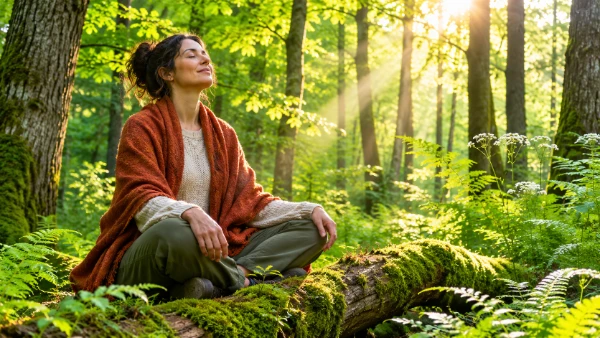
Once in the woodland, begin by slowing to a pace that allows comfortable observation. Notice the shapes of trees, the different shades of green and the way sunlight reaches the ground. Listen for nearby and distant sounds without trying to identify every source. Pay attention to the temperature of the air and any natural scents that become noticeable. If it feels comfortable, rest a hand against a tree trunk or examine a fallen leaf, taking care not to disturb living plants or wildlife. There is no requirement to engage every sense continuously. The aim is to become more attentive to the surroundings while allowing thoughts to come and go naturally. A brief pause on a bench can be just as relevant as walking along the path.
Phones are worth putting away during the session, apart from situations where they are needed for navigation or safety. Checking messages, taking repeated photographs or monitoring fitness statistics can shift attention back towards familiar daily pressures. Some people prefer to visit alone, while others find that walking quietly with a trusted companion feels more comfortable. Both approaches are valid. If walking with someone, agree beforehand that occasional silence is welcome. At the end of the visit, take a moment to notice whether anything has changed: perhaps breathing feels easier, thoughts seem less hurried or the surrounding sounds are more noticeable. There is no need to force a particular emotional response. Some days the difference will be obvious; on others, the experience may simply provide an enjoyable break outdoors.
Making Forest Bathing a Regular Habit Without Unrealistic Expectations
Consistency may be more useful than treating forest bathing as an occasional special event. Someone living near woodland might schedule a gentle walk once or twice a week, while a city resident could begin with short visits to a tree-lined park during lunch breaks or weekends. The ideal frequency has not been established scientifically, so personal circumstances should guide the routine. Choosing a location that is easy to reach reduces the likelihood that travel arrangements will become an obstacle. Seasonal changes can also make familiar places interesting throughout the year. Spring flowers, summer shade, autumn leaves and the quieter atmosphere of winter all provide different opportunities for sensory awareness. Rather than following a rigid programme, it is usually easier to maintain a routine that fits naturally into existing commitments.
Forest bathing can also be adapted for people who find long walks difficult. A person with limited mobility may prefer an accessible woodland trail, a park bench beneath mature trees or a level path suitable for a wheelchair. The activity does not depend on covering distance, and remaining seated while observing the surroundings can still provide meaningful contact with nature. Personal safety remains essential, especially in unfamiliar forests. Check the weather, avoid dangerous terrain and take precautions against ticks, particularly in areas where Lyme disease is present. People with pollen allergies or respiratory sensitivities should consider local conditions, while those with significant health limitations may benefit from discussing suitable outdoor activities with a healthcare professional. Natural environments can support wellbeing, but they are not automatically free from risks.
Perhaps the most useful way to approach Shinrin-yoku is to regard it as a modest, repeatable form of self-care rather than a treatment promising dramatic results. A forest visit will not remove financial worries, workplace pressures or the underlying causes of mental health conditions. It can, however, provide a temporary change of surroundings and an opportunity to interrupt the constant demands of daily life. This broader relationship between nature and wellbeing is increasingly recognised in healthcare: NHS England includes walking groups, gardening and other outdoor activities within its green social prescribing initiatives. The evidence available in 2026 supports taking nature-based relaxation seriously while remaining realistic about its limitations. For many people, the lasting value of forest bathing lies in something straightforward: setting aside regular time to move slowly, pay attention and enjoy being among trees.